

Spreading rollers
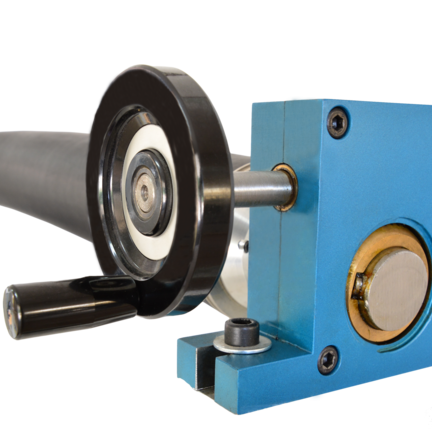
Spreader rollers (also known as web-spreading rollers) are specially designed rotating cylinders used in machinery to stretch materials widthwise and eliminate wrinkles or creases. They ensure that a continuous web of material (such as paper, plastic film, or textiles) moves through the production process taut, flat, and undamaged.
How does a spreader roller work?
The basic principle is that the roller exerts an outward force—either laterally or in an arc—from the center of the material web toward the edges. This forces the material toward the sides, smoothing out any creases.
Types of spreader rollers
Depending on the product and the type of machine, various types of rollers are used:
• Curved rollers (banana rollers): These rollers have a distinctive curved shape. Due to this curvature, the material travels a different distance at the center than at the edges, pulling the web tautly outward. The curvature is sometimes manually or automatically adjustable.
• Spiral rollers: These are straight rollers featuring steel or rubber spirals (resembling screw threads) that run from the center toward the edges. As the material web passes over them, the spirals push the material toward the outer edges.
• Slat rollers & cord rollers: These utilize moving segments (slats or cords) that continuously slide outward during rotation at the point where they contact the material. • Spreader elements with rubber rings: Modern versions utilize straight guide rollers fitted with separate, elastic rubber rings; these tilt under pressure, thereby spreading the material without wrinkles.
Where are they used?
Spreader rollers are found wherever thin, flexible materials supplied in rolls are processed—such as in the paper industry, textile manufacturing, the processing of plastic and aluminum foils, or the packaging industry.


